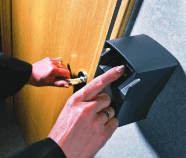
Time & Attendance.
| The IAS T&A unit is a single touch, fingerprint based
access control system. Simply placing a finger on the scanner enables the
unit to identify the user and grant access to those who are authorized.
Registering users on the system is fast and simple. Using PC based software
the users details are entered and the fingerprint scanned using a simple
desktop device. The encrypted data is then transferred to the access control
unit using a conventional computer network. No more signing in books or
storing mountains of clocking in cards, every entry and personell movement
can be held on hard drive. This system also includes an effective fire register
of who is in the building and can be accessed with a 'mouse click'. |
|
 |
Methods of communicating with the IAS T&A unit include: |
Adding and removing users is very straight forward. No more worrying about ex-employees not handing in keys & passes.
|
Features |
Functionality * Direct control of electronic locks * Can be operated Standalone, TCP/IP network, GPRS,GSM, PSTN. * Works in direct sunlight * Automatic detection of finger on scanner * Automatically adjusts scanning to suit finger type * Compensates for dry skin * Resistant to:– o Subzero temperatures o Arid and tropical climates o abrasion stress and corrosion o Impact vibration and shock * Latent fingerprint image removal (does not accept print image left on screen) |
Certified BS EN 55022: 1995 & BS EN 55024: 1998
